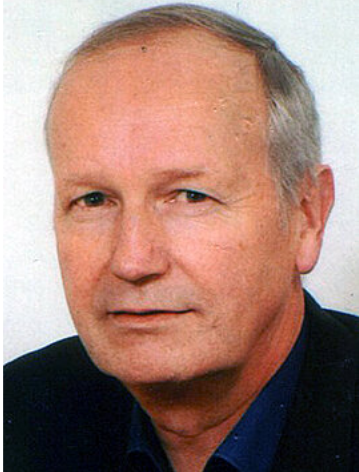
 It is with great sadness that I share with you the news of Wolfram Saenger’s passing on February 16th, 2026, at the age of 86. With him the crystallographic community has lost one of its leading figures, a scientist of immense productivity, unusually broad interests and a unique talent for synthesizing and generalizing scientific findings.
Wolfram was born in Frankfurt-Hoechst, but spent most of his childhood and youth in the Swiss-German border region where he graduated from high school in Lörrach. He went on to study chemistry in Darmstadt and Heidelberg and earned a degree as Dr.-Ing. from TH Darmstadt in 1965 for studies of cyclodextrin inclusion complexes carried out under the guidance of Friedrich (Fritz) Cramer. After postdoctoral research at Harvard, working and publishing with Robert B. Woodward, Jack Z. Gougoutas and Elias J. Corey, he joined the Max Planck Institute for Experimental Medicine in Göttingen as independent group leader in the Department of Chemistry. It was there that he developed his life-long research passion for structural and functional studies of inclusion compounds, nucleic acids and their constituent parts, proteins and large biomolecular assemblies. Work in these areas expanded and matured at the Institute of Crystallography of Freie Universität Berlin where Wolfram held a professorship from 1981 until his retirement.
Starting from his early work on cyclodextrin and crown ether inclusion complexes, Wolfram realized the central importance of hydrogen bonding in host-guest interactions. His deep insights into these non-covalent intermolecular bonds which are equally important in proteins and nucleic acids were summarized in the influential monograph by Jeffrey, G. A. & Saenger, W. (1991) Hydrogen Bonding in Biological Structures. Structural studies on nucleic acids and their constituent parts had earlier led him to publish another widely read and referenced book: Saenger, W. (1983) Principles of Nucleic Acid Structure. This work had a defining influence on an entire generation of macromolecular crystallographers. Wolfram’s interests in structural biology were unusually wide, covering protein-nucleic acid interactions, various enzymes and proteins of the immune system and culminating in his structural studies of the basis of cyanobacterial photosynthesis which is carried out by large intra-membrane protein complexes.
His impressive productivity with far more than six hundred highly cited publications, many in leading scientific journals, in addition to several books earned Wolfram broad international recognition. He was elected as member of the European Molecular Biology Organization (EMBO) in 1985 and of the Berlin-Brandenburgische Akademie der Wissenschaften in 1994. In 1988, he was awarded the Gottfried-Wilhelm-Leibniz-Preis of the German Research Foundation (DFG), the highest science prize in Germany. In addition, Wolfram received the Humboldt Research Prize from the German Alexander von Humboldt Foundation in 1988, the French-German Gay-Lussac Humboldt Prize in 1995 and the Carl Hermann Medal of the German Society for Crystallography (DGK) in 2004 in recognition of his life-time achievements in crystallography.
For German crystallography Wolfram left a lasting mark as the last President of the West-German Arbeitsgemeinschaft für Kristallographie (AgKr) when he facilitated its merger with the East-German Vereinigung für Kristallographie (VFK) in 1991 to form the DGK. In 2020 he was elected an honorary member of the DGK for his role in founding the society and his scientific work.
As one among a small group of pioneers in German protein crystallography Wolfram has inspired and educated an entire generation of structural biologists. Many of those who passed through his vibrant laboratory went on to assume leading roles in academic or corporate research. I am proud to say that I was one of this select group of aspiring junior researchers. He taught us that a deep commitment to science, clarity of thought and ambition in choosing worthwhile projects are prerequisites for highest productivity and research achievements. For his we will always keep him in our memory.
For a full obituary, please read N. Sträter & Udo Heinemann (2026) Acta Crystallographica Section D 82, https://doi.org/10.1107/S2059798326002974.
Udo Heinemann, Berlin